Project Management
Project Management is the responsibility by the GB/BB. The GB/BB must manage the team cohesiveness, synergy, and deliver technical results and satisfy the voice of the customer.
It is not required to be a certified Project Manager to become a CSSGB or CSSBB but having this advance skillset will help your effectiveness.
There is a Project Management Professional (PMP) certification offered by the Project Management Institute.
This certification is independent of the certification as a Black Belt or Green Belt. It's critical that a team leader is able to foster team member engagement and transformation leading to fundamental change. A successful GB/BB will not only need proficient Six Sigma skills but also be an effective change agent and Project Manager.
Leaders of projects gain power when they know you care. The team will care more about what you know when they know you care about them. Pay attention to their needs to improve your influence.
A Project Manager's job in part is asking the right questions and properly interpreting the data and statistics.
You're not expected to have the answers to the team's problem statement, but rather to manage the project from start to finish.
A step function improvement almost certainly depends on cultural transformation. A strong grasp of statistics, charts, graphs, and tactical improvements are not enough.

PMP Certification
The PMP certification is supported by*:
* criteria for certification are subject to change
A GB/BB/MBB can be a master of the Six Sigma concepts, author books, generate clever templates, create professional presentations and so on, but if they are unable to lead a team, asks the difficult questions, cultivate change, influence culture, the chances of success are slim.
The credibility of that person and the program are also compromised. Six Sigma teams sizes typically consist of 5-10 members. Some of the members may be GB’s, other BB’s but this is not a requirement. Projects usually take 2-26 weeks to complete depending on many factors.
Starting and Closing a Project
Each team project requires a project contract, also referred to as a charter, before the DMAIC or DFSS process can begin. The team closes out the project when the objective is met, the contract is signed-off, and disbands.
The project contract should have at a minimum:
1) Project Title or Identification Number
2) Problem Statement – detail the problem to improve with numbers and time frames. Avoid bias or any indication of a solution in the statement. State only facts, refrain from opinions or accusations.
3) Business Objective – included information should be SMART:
- SPECIFIC – detailed information on the process or customer voice
- MEASURABLE – current and desired goal, may be more than one metric
- ATTAINABLE – within the teams control, not jeopardized from the start
- RELEVANT – aligns with the company objectives, values, and vision
- TIMELY – defined start and expected completion dates, use a Gantt Chart
4) Financial Benefits Review and quantification - This should involve financial and managerial accountants along with the GB, BB, and/or MBB. It is important to quantify as accurately as possible including the timing. Properly distinguishing between hard and soft savings is critical.
Hard savings are defined as actual money saved or not spent as planned.
Soft savings are intangible improvements such as shifting work tasks, improving customer perception, and reducing failure risks.
5) Team members – signatures, roles, and date of initiation (may not be firm at this point)
6) Process Owner – One team member that will take over control and manage the gains after the project is closed. This person could be the GB/BB leading the project but is not in most cases. Someone that is close to the process and willing to take on the responsibility of controlling the gains after the team disbands.
7) Champion/Sponsor – This person is a senior level executive or manager. This person will remain out of the in-depth participation with the team. But will remain connected to provide project initial direction and guidance without suggesting a course or solution. They remove organizational barriers, supply resources, and promote team efforts. They serve as the communication link to upper management. This may be a Master Black Belt.
8) Scope – defined start and finish (upper and lower) boundaries of the project to stay within while achieving objective.
9) Upper Management Approval - a contract is submitted to upper management and must receive their approval. Upper management may also attend the kick-off meeting to address the team and elaborate on the importance and to show connectivity.
When the project contract is completed it should show a direct link from the team members, leader, GB/BB, to upper management. The team now has the autonomy to operate within the conditions with in the contract. However, contract stipulations are negotiable, information will evolve from the team's efforts.
Changes to the project contract can occur within the scope, resource needs, or the objective. It does not need to be perfect for the team to start. It never hurts to have ideas to put a break in the monotony, icebreaker activities can refresh and invigorate a group.
Six Sigma material can be challenging, dry, and tough to make interesting. Icebreakers are quick tricks for trainers to get their group warmed-up or revived. They are useful in group development and can be used in later phases to challenge assumptions or drive key messages such as synergy and teamwork.
Project Management Software
There's a wide variety of software available specifically designed to helped Project Managers.
ProjectManager.com has a several options, tutorials, templates, and free trials for a variety of resources from Gantt Charts, Kanban, Task Management, and more. Their cloud-based software is compatible with Windows and Mac with no downloads or installation required.
Project Management Tools
The 3 ELEMENTS of Project Management are:
- Planning
- Scheduling
- Controlling
There are seven common project management tools that Six Sigma project managers should be familiar with:
1) Matrix Diagram
2) Tree Diagram
3) Process Decision Program Chart (PDPC)
4) Activity Network Diagram
5) Interrelationship Diagraph (ID)
6) Affinity Diagram
7) Prioritization Matrix (also used in MEASURE phase)
Additional Resources
A few Project Management Metrics
Project Management status is often expressed in a multi-dimensional term called Earned Value (EV). This offers more than just the budget based on the schedule but examines the budget spent based on what is actually done and what is budgeted at completion.
EV = ACTUAL % Complete * Amount Budgeted at Completion
Schedule Performance Index (SPI) is a term used to describe the status of the project at a given time. The rate at which the project is meeting schedule expectations.
PV = Planned Value
PV = PLANNED % Complete * Amount Budgeted at Completion
SPI = EV / PV
A value of 1.0 means the project is ON schedule.
A value <1.0 means the project is BEHIND schedule.
A value >1.0 means the project is AHEAD of schedule.
Straight Line Method Depreciation (SLM) is a term used to describe the linear depreciation rate of an asset.
SLM = Asset Cost / Useful Months
This will provide a depreciation value per month that is written off (same amount every month) on that asset.
A $60,000 asset that has an expected useful life of 60 months can be depreciated by $1,000 for 60 months after it has been put into service.
Common Acronyms used in PM
AC = Actual Cost
BAC = Budget at Completion
BCR = Benefit Cost Ratio
CBR = Cost Benefit Ratio
CPI = Cost Performance Index
CV = Cost Variance
EAC = Estimate at Completion
EF = Early Finish
EMV = Expected Monetary Value
ES = Early Start
ETC = Estimate to Complete
EV = Earned Value
FV = Future Value of Money (see Finance page for more info)
IRR = Internal Rate of Return (see Finance page for more info)
LF = Late Finish
LS = Late Start
NPV = Net Present Value of Money (see Finance page for more info)
PERT Program Evaluation and Review Technique
PP = Payback Period (see Finance page for more info)
PV = Planned Value
ROA = Return on Assets (see Finance page for more info)
ROI = Return on Investment (see Finance page for more info)
SLM = Straight Line Depreciation Method
SPI = Schedule Performance Index
SV = Schedule Variance
VAC = Variance at Completion
The acronyms with "more info" are the most likely to show up on a Six Sigma certification exam. It is recommended that you know the definition and the calculation of the simpler formulas.
Accelerate your DMAIC project

Click here to review ideas and strategies to reduce the amount of time to close your project. These tactics have with varying levels of risk and effort to reduce the time to close your project.
Critical Path
One of the most commonly used terms in Project Management is Critical Path. This is often more difficult than it sounds and can change as the project progresses. Shown below are two tutorials we recommend that aren't too long yet offer a comprehensive simplistic review of the calculation and variations.
Proceed to the DMAIC Six Sigma Project Path
Templates, Statistics Tables. and Calculators
Link to newest Six Sigma Material
Return to Six-Sigma-Material Home Page

Recent Articles


-
Process Capability Indices
Oct 18, 21 09:32 AM
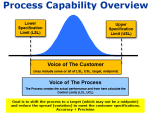 Determing the process capability indices, Pp, Ppk, Cp, Cpk, Cpm
 -
Six Sigma Calculator, Statistics Tables, and Six Sigma Templates
Sep 14, 21 09:19 AM
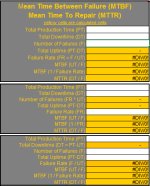 Six Sigma Calculators, Statistics Tables, and Six Sigma Templates to make your job easier as a Six Sigma Project Manager
 -
Six Sigma Templates, Statistics Tables, and Six Sigma Calculators
Aug 16, 21 01:25 PM
Six Sigma Templates, Tables, and Calculators. MTBF, MTTR, A3, EOQ, 5S, 5 WHY, DPMO, FMEA, SIPOC, RTY, DMAIC Contract, OEE, Value Stream Map, Pugh Matrix
Site Membership
Click for a Password
to access entire site
Six Sigma
Templates & Calculators



Six Sigma Modules
The following are available
Click Here
Green Belt Program (1,000+ Slides)
Basic Statistics
Cost of Quality
SPC
Process Mapping
Capability Studies
MSA
Cause & Effect Matrix
FMEA
Multivariate Analysis
Central Limit Theorem
Confidence Intervals
Hypothesis Testing
T Tests
1-Way ANOVA
Chi-Square
Correlation and Regression
Control Plan
Kaizen
MTBF and MTTR
Project Pitfalls
Error Proofing
Effective Meetings
OEE
Takt Time
Line Balancing
Practice Exam
... and more